
Developed, managed, and scaled a sustainable coaching program
Taking a positive approach to personal development. Created a new support and development program for users based on identified needs.
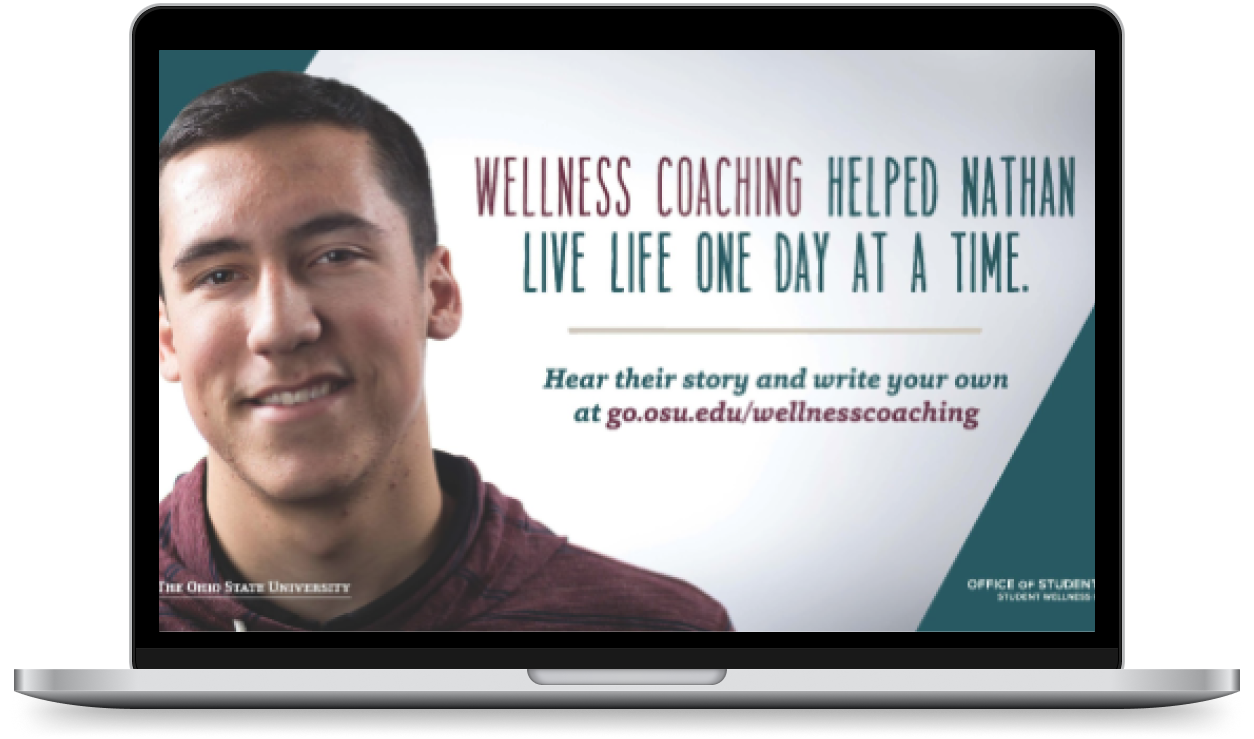

The Service:
Wellness Coaching is a service that provides opportunities for members to gain awareness regarding the capacity to create the life they want to live, both now and in the future. Wellness coaches use the science of positive psychology, coaching, and adult learning theory to help members achieve relevant and meaningful goals. This is achieved through both individual and group coaching settings.
The Problem:
Reported well-being metrics (stress, substance use, suicidal ideation, lack of social connection, etc.) were progressively getting worse on campus. These trends followed the “mental health crisis” on college campuses across the country.
Specifically, the current support services on campus were unable to keep up with demand. For instance, wait times for counseling appointments regularly hovered around 6 weeks.
While clinical services are demonstratively effective, not all students need the level of care and training a counselor provides. Most students were struggling with everyday issues indicative of healthy human functioning (stress over an upcoming exam, homesickness, etc.).
The Solution:
Create a complementary and additive student service to support the “murky middle.” By establishing a support service to combat normative stressors, clinical services will be able to serve those with higher acuity while serving more students overall.

Project Details
My Role
Cultivate a culture of care and well-being through the addition of a new peer-to-peer service aimed at increasing the capacity of students to strive and thrive within the university context
My Contributions
Provided leadership and vision for the program’s sustainable growth through intentional collaboration with key partners
Outlined and developed core program characteristics (coaching vs. counseling, budget development, referral networks, training materials, etc.)
Supervised full and part-time staff in the delivery of coaching services to students including initial and ongoing supervision and professional development
Measured the efficacy of the coaching program and reported to university leadership
Project Timeline
4 years
Summer 2013 -Summer 2017
Foundational elements and key outcomes of coaching progam ↓
Design and deliver an evidence-based and scalable coaching service
Foundational Elements

Holistic Wellness: Take a whole-person approach to personal development.
Positive Psychology: Utilize strengths-based approaches to help students navigate transitions and achieve goals.

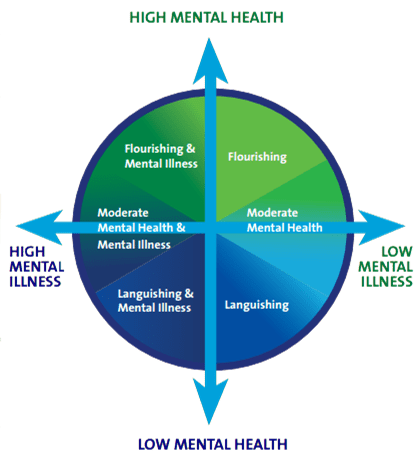
Ground in Theory: Apply adult learning, student development, and transition theories in all coaching interventions.
Outcomes
Program Research Questions and Outcomes
Learn 💡
As a result of wellness coaching, users will have an increased knowledge of wellness and character strengths
Connect 🔗
As a result of wellness coaching, users will have an increased self-awareness of personal wellness and strengths
Do ✅
As a result of wellness coaching, users will have an increased ability to initiate and maintain wellness-related behaviors
As a result of wellness coaching, users will have an increased ability to utilize their unique strengths
As a result of wellness coaching, users will have an increased ability to set and achieve goals
**Percentages indicate those who answered agree or strongly agree
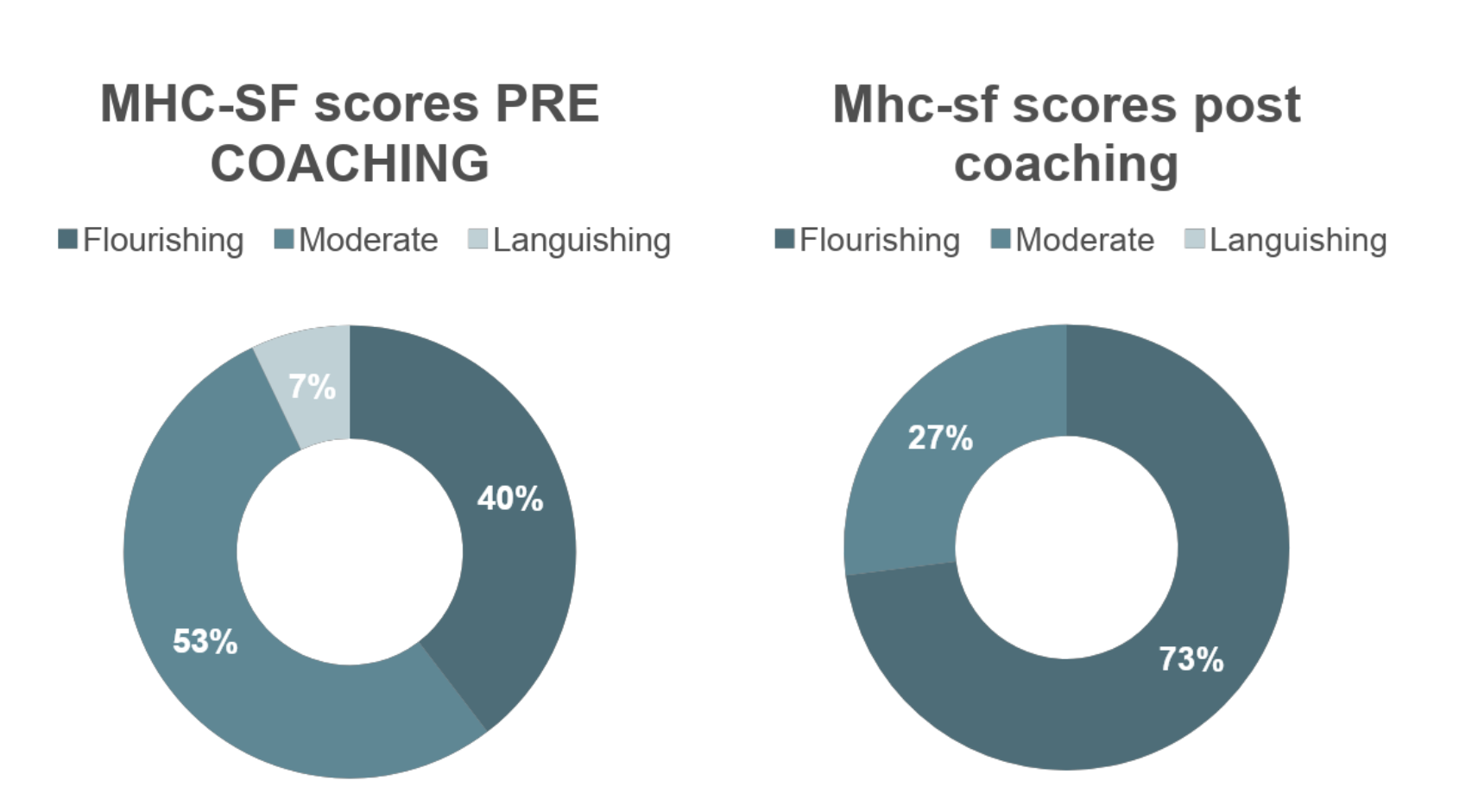
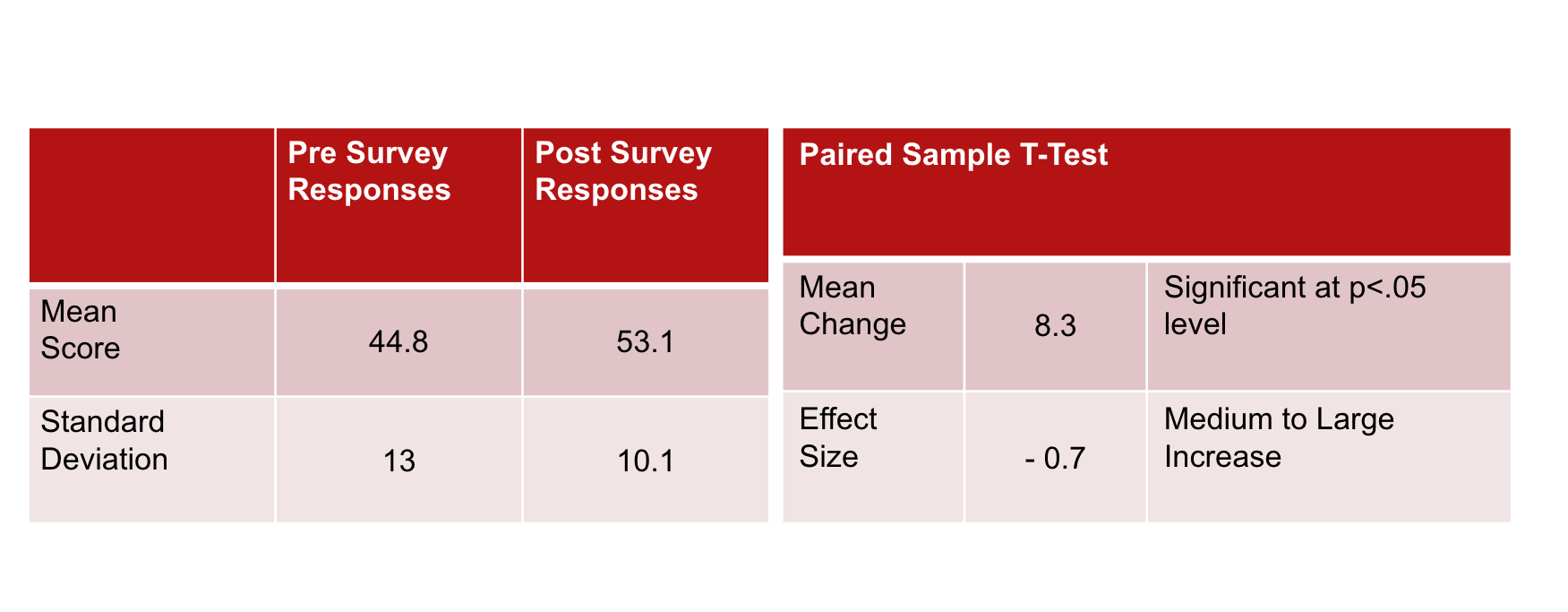
Mean change of 8.3 on a 70-point scale.
Statistically significant increase in user well-being
92%
92%
90%
Impact on Flourishing
As defined and measured by pre-post administration of empirically-validated Keyes Mental Health Continuum Short Form
No reports of Languishing in Post-Test
33% increase in “Flourishing” population
94%
91%
What I Learned
Think differently: Approaching the problem the same way all the time does not always yield the same results. Instead of adding more counselors, this innovative approach added more capacity to the system at a fraction of the cost while yielding immense results.
Create peer learning opportunities: The majority of coaching was facilitated by peers with shared experiences. Challenge the hierarchical nature of learning and empower peers and near peers to support growth in shared contexts.
Collaborate early and often: Initiating a new program takes shared understanding and metrics to be successful. Engage stakeholders up, down, and across the organization early and often to achieve shared success.
Want to nerd out? 🤓
Explore these research articles that go into more depth on building and scaling this program.
2015
2016
This is where it all started. Take a look at how coaching has been a byline in my experience with my work at BetterUp.