
Helping users turn evidence-based information into action
Created new content category for digital well-being platform
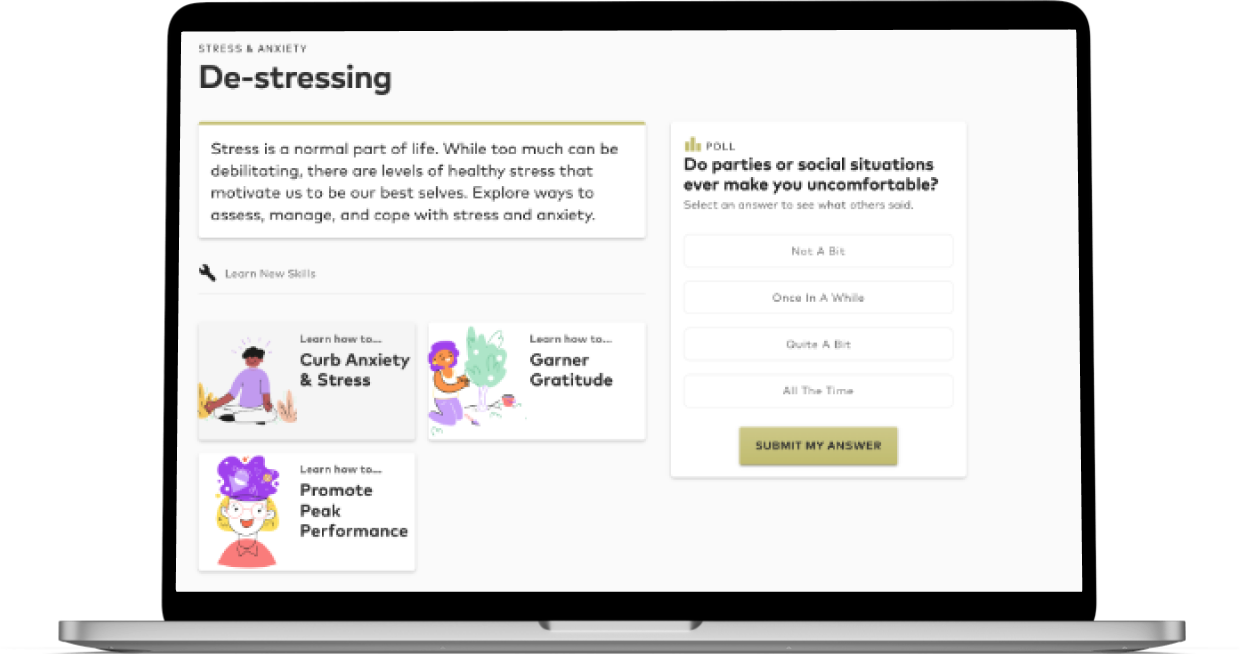

The Product:
YOU at College is an upstream, comprehensive well-being platform that personalizes content, resources, and action steps for college-going users.
The Problem:
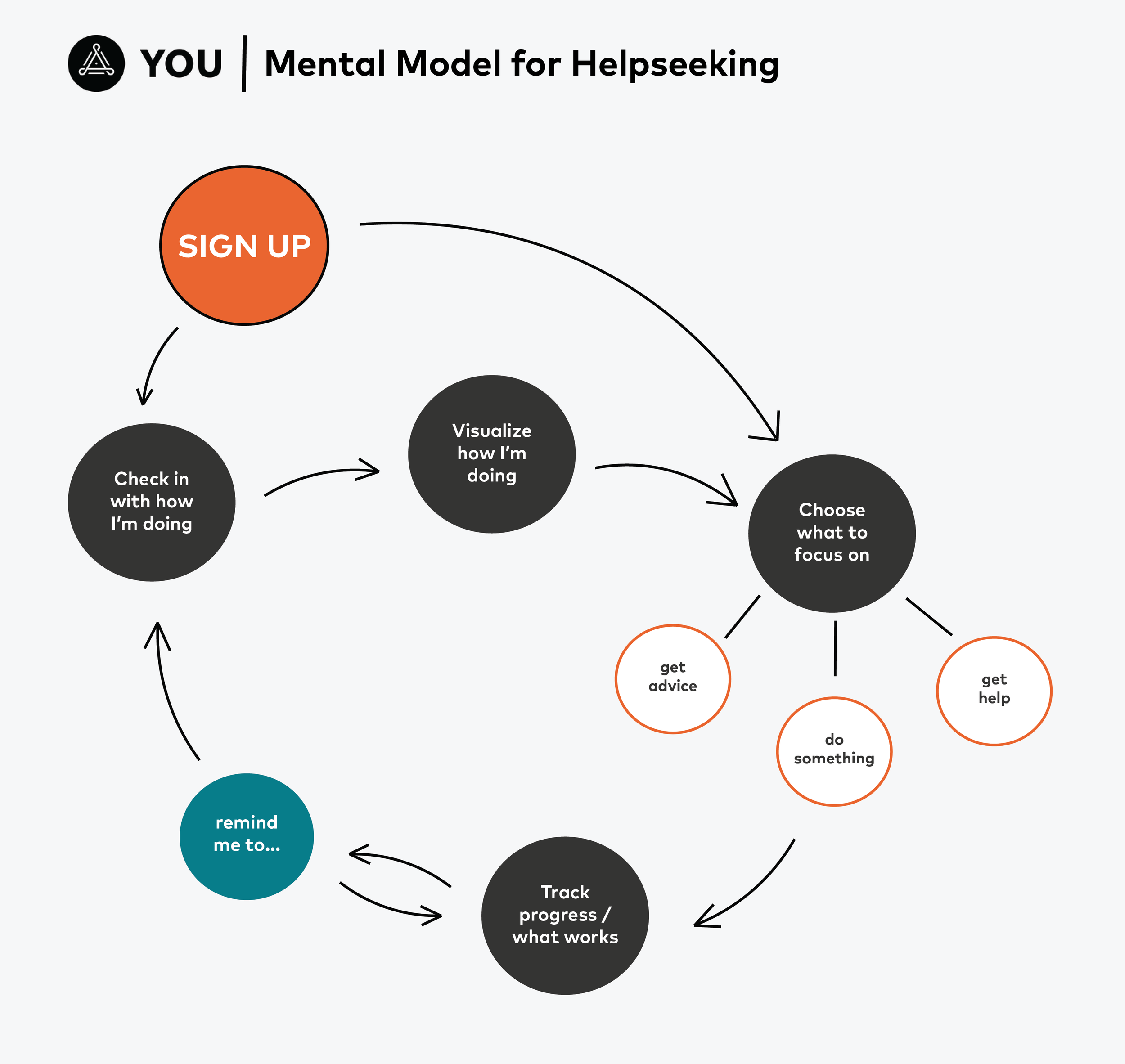
The mental model for using a digital well-being platform highlighted three key motivators:
1) Checking in on my well-being
2) Visualize my current state of well-being
3) Selecting a focus area or goal for myself
While YOU at College sourced expert advice, and campus resources, there was a lack of “action-oriented” content for users to upskill and positive impact their current levels of well-being.
The Goal:
Create actionable, delightful, and interactive content and learning modules that deliver users key well-being outcomes
Project Details
My Role
Served as well-being SME to source and evaluate well-being interventions for 23 priority areas. Provided end-to-end content design and outcome measurement to inform future product roadmap.
My Contributions
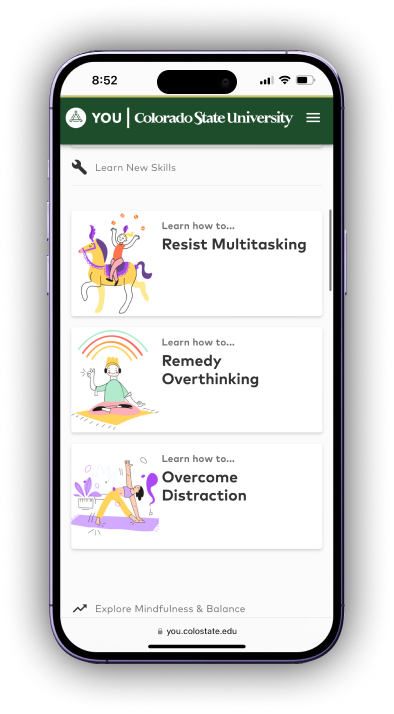
Created over 60 pieces of evidence-based digital well-being content for 20 well-being topics/areas (i.e. stress and anxiety, finances and basic needs, mindfulness, etc.)
Collaborated with design and dev teams for UX/UI of new content type
Measured efficacy of skills content that informed future product roadmap
Project Timeline
3 months
Fall 2021
Process and key outcomes of
skills project ↓

Created evidence-based and action-oriented content type to promote user growth
Content Design and Management
Outcomes
33%
Of content views were Skill Cards
74%
Of users reported having learned a skill (2022-2023)
93%
Of students that learned a tip or skill have practiced it
What I Learned
Knowing something and doing something are different: Content must move beyond information transfer. Modern content approaches must allow users to apply knowledge and create feedback loops.
Users craved applicability to their life: To promote learning, content must establish relevance to a users’ experience
Need to evolve from static written content: Long-form static content, no. matter how good it is, does not meet the expectation of users for delightful, digestible, and impactful well-being content
Not too shabby. See how I expanded this work into interactive content modules.